Airline industry speculation has long swirled around consolidation, but rarely has a CEO been so candid. United Airlines CEO Scott Kirby confirmed in a recent interview that he personally approached American Airlines about a potential merger—an admission that could reshape the future of U.S. commercial aviation.
This isn’t a rumor, a leak, or a market whisper. It’s a direct acknowledgment from one of the most influential executives in modern aviation: the idea of combining United and American didn’t just cross his mind—it was actively pursued.
The revelation didn’t come with fanfare, but in a matter-of-fact tone during a discussion on industry competition. Kirby stated the proposal was driven by concerns over competitive threats, specifically from a strengthened Delta Air Lines and increasing dominance by low-cost carriers. But the response from American? A flat rejection.
Why United Wanted the Merger
At first glance, a United-American merger seems logical. Together, the two airlines control nearly 40% of the domestic air travel market. Their combined network would dominate key hubs—Chicago, Houston, Dallas, Denver, Newark, and Washington Dulles—creating unmatched connectivity.
But Kirby’s rationale went beyond scale. His argument centered on long-term viability. Over the past decade, Delta has outperformed its legacy peers in profitability, customer satisfaction, and operational reliability. Its superior cost structure and integrated premium product have given it pricing power and brand loyalty that United and American struggle to match.
“We’re in a two-horse race with Delta, and we’re losing,” Kirby told an industry panel, underscoring urgency.
A merger could have allowed for:
- Cost synergies: Eliminating duplicate routes, consolidating back-office operations, and streamlining fleet maintenance.
- Loyalty program consolidation: Merging MileagePlus and AAdvantage—two of the most valuable loyalty portfolios—into a single, high-revenue asset.
- Global network control: A combined powerhouse with unmatched transatlantic and transpacific reach.
Without consolidation, United and American remain locked in a high-cost, low-margin competition, often undercutting each other on pricing instead of innovating.
American Airlines Said No—Here’s Why
American Airlines didn’t just hesitate. It rejected the proposal outright. CEO Robert Isom called the idea “not in the best interest of our customers or our company.”
Behind the scenes, skepticism ran deeper.
For one, American leadership feared losing identity. Despite financial struggles, American retains strong brand equity in its core hubs, especially Dallas/Fort Worth—the world’s busiest single-airline hub. Merging under United’s leadership would almost certainly mean a diluted American brand, cultural assimilation, and executive attrition.
Second, antitrust concerns loom large. The Department of Justice has grown increasingly aggressive in challenging industry consolidation. A United-American union would face a grueling regulatory gauntlet, likely triggering a lawsuit. Even if approved, the conditions could gut the merger’s value—forced asset sales, slot divestitures, or restrictions on pricing.
Third, American believes in its turnaround plan. Under Isom, the airline has invested heavily in customer experience: new interiors, upgraded Wi-Fi, expanded premium seating, and an aggressive fleet refresh. They’re betting on operational excellence, not consolidation, to win back customers.
The Real Obstacle: Antitrust and Public Perception
Even if American had said yes, the odds of regulatory approval are slim.

The U.S. airline industry is already an oligopoly. After the 2008–2013 wave of mergers—Delta-Northwest, United-Continental, American-US Airways—the Big Four (Delta, United, American, Southwest) control over 80% of domestic capacity.
Adding United and American would leave just three dominant carriers. The DOJ’s Antitrust Division, under leadership skeptical of corporate consolidation, would likely block it on grounds of reduced competition and higher fares.
Historical precedent supports this. The proposed merger between JetBlue and Spirit Airlines was blocked in 2023, despite both being smaller players. A United-American deal would be exponentially more scrutinized.
Beyond regulators, public sentiment is a hurdle. Passengers remember how past mergers led to service disruptions, fare spikes, and reduced route options. The promise of “synergies” often translates to fewer choices, especially in secondary markets.
What This Means for Travelers
Consumers should not expect lower fares or better service from a United-American merger—at least not immediately.
Consolidation typically leads to:
- Higher ticket prices in non-competitive markets (e.g., routes served by only one airline post-merger)
- Reduced service to smaller cities as redundant routes are cut
- Loyalty program devaluation as miles are restructured or redemption options shrink
- Long-term network improvements only after operational integration (a process that can take 5–10 years)
For example, after United merged with Continental in 2010, passengers faced years of inconsistent branding, IT system failures, and service lapses. It took nearly a decade for United to stabilize and modernize its product.
A new mega-merger would restart that cycle. Travelers in overlapping hub cities—Chicago, Houston, Washington—might lose direct options. Meanwhile, business travelers could face less competitive premium pricing, especially on transcontinental and international routes.
On the flip side, a combined airline could invest more in next-gen aircraft, sustainable fuels, and digital infrastructure—benefits that materialize only if the merger delivers on promised efficiencies.
Strategic Alternatives to Full Merger With merger talks dead—for now—United and American must find other ways to compete.
1. Strengthening Alliances Both are members of Oneworld (American) and Star Alliance (United), but they could deepen coordination on transatlantic and transpacific routes. Joint ventures with foreign carriers like Lufthansa, Air Canada, or ANA offer shared revenue without full integration.
2. Loyalty Program Partnerships Instead of merging programs, they could allow cross-redemption or elite status recognition. This would enhance value for frequent flyers without triggering antitrust concerns.
3. Operational Benchmarking United could adopt American’s recent customer service improvements, while American might learn from United’s stronger international premium product. Quiet collaboration beats forced merger.
4. Regional Consolidation Rather than uniting at the top, both could acquire or partner with regional carriers to strengthen feeder networks—especially in underserved areas.
5. Tech-Led Efficiency Investing in AI for dynamic pricing, crew scheduling, and predictive maintenance could yield cost savings rivaling merger synergies—without regulatory risk.
Leadership Vision vs. Market Realities
Scott Kirby’s move reveals a bold, long-term vision. He’s not managing quarterly earnings—he’s thinking about industry structure a decade out.
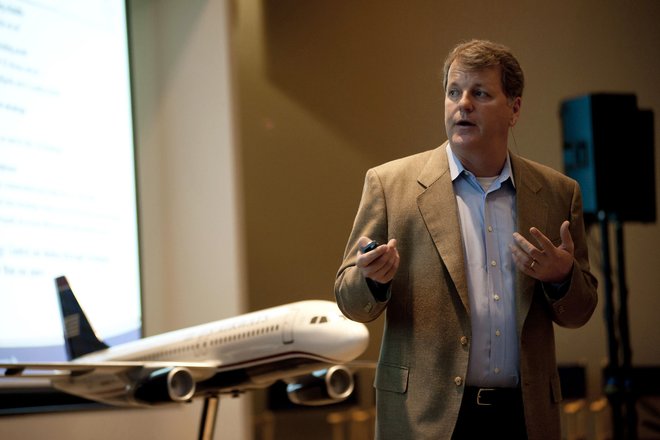
But vision alone isn’t enough. As United’s former COO and a key architect of American’s network pre-2016, Kirby understands airline mechanics better than most. Yet even he underestimated the emotional, cultural, and political barriers to merger.
American didn’t just say no to a deal—it said no to subsumption. For all the financial logic, legacy airlines guard their identity fiercely. The American Airlines name, the iconic eagle logo, the DFW hub pride—these aren’t balance sheet items. They’re cultural anchors.
And in today’s anti-monopoly climate, being “too big” is a liability, not a strength.
What’s Next for United and American?
Neither airline is backing down from competition.
United continues expanding its premium international offering—new Polaris lounges, Boeing 787 upgrades, and more nonstops from smaller cities. Its focus remains on high-yield business and international travel.
American is doubling down on domestic reliability and customer experience. Its “Flagship” suite product competes directly with United’s Polaris, and its investment in airport facilities aims to win back corporate contracts.
Both are also navigating the same external pressures: pilot shortages, rising fuel costs, and evolving work-from-anywhere travel patterns. The pandemic reshaped demand, and neither carrier has fully adapted.
A merger might have offered a reset. Instead, they’ll compete—head to head, hub to hub, mile for mile.
The Bottom Line
Scott Kirby’s admission changes how we view the airline industry. It confirms that consolidation isn’t just a market rumor—it’s a strategic option being actively explored by top executives.
But it also shows the limits of scale in a regulated, brand-sensitive sector. Even when the math makes sense, the human and political factors often don’t.
For travelers, employees, and investors, this moment is a reminder: the airline industry isn’t just about routes and revenues. It’s about identity, trust, and power.
A United-American merger may have been logical on paper. In reality, the cost—regulatory, cultural, and reputational—was too high.
Now, the competition continues. And Delta watches from the lead.
What did United CEO Scott Kirby say about the merger? Scott Kirby confirmed he approached American Airlines about a potential merger, citing competitive pressures from Delta and low-cost carriers, but acknowledged the proposal was rejected.
Why did American Airlines reject the merger? American Airlines rejected the merger due to concerns over brand identity, regulatory hurdles, and confidence in its ongoing customer service and operational turnaround.
Would a United-American merger have been approved? It’s highly unlikely. The Department of Justice has shown resistance to airline consolidation, and a merger creating a duopoly with Delta would face significant antitrust scrutiny.
How would the merger affect airline passengers? Passengers could face higher fares on non-competitive routes, reduced service to smaller markets, and potential loyalty program changes, though long-term network improvements might follow.
What are the benefits of a United-American merger? Potential benefits include cost synergies, a stronger global network, combined loyalty programs, and improved competitive positioning against Delta and budget airlines.
Did United and American previously merge? No, but both have undergone major mergers—United with Continental in 2010, and American with US Airways in 2013. A United-American union would be unprecedented.
Is another merger attempt likely? Not in the near term. With American’s clear rejection and regulatory risks, any future talks would require a major shift in leadership, market conditions, or antitrust policy.
FAQ
What should you look for in United CEO Confirms Merger Talks with American Airlines? Focus on relevance, practical value, and how well the solution matches real user intent.
Is United CEO Confirms Merger Talks with American Airlines suitable for beginners? That depends on the workflow, but a clear step-by-step approach usually makes it easier to start.
How do you compare options around United CEO Confirms Merger Talks with American Airlines? Compare features, trust signals, limitations, pricing, and ease of implementation.
What mistakes should you avoid? Avoid generic choices, weak validation, and decisions based only on marketing claims.
What is the next best step? Shortlist the most relevant options, validate them quickly, and refine from real-world results.